

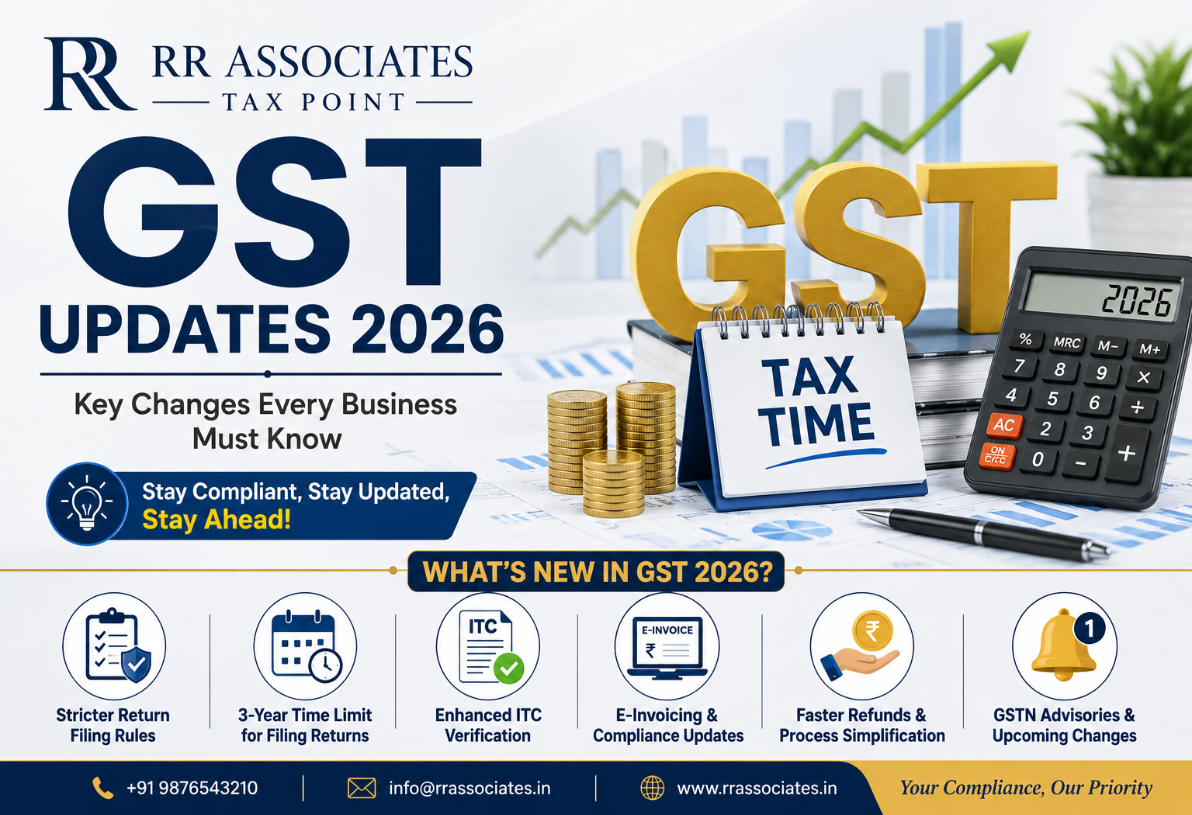
The Goods and Services Tax (GST) framework continues to evolve in 2026 with several compliance-related changes aimed at improving transparency and reducing tax disputes. Businesses, accountants, and taxpayers must stay updated to avoid penalties and ensure smooth operations.
The GST portal has implemented tighter validations for return filing. Taxpayers with pending liabilities, negative balances, or mismatches in Input Tax Credit (ITC) may face restrictions while filing GSTR-3B. Businesses should regularly reconcile their records to prevent disruptions.
One of the most important changes in 2026 is the strict enforcement of the three-year deadline for filing GST returns. Returns older than three years cannot be filed, resulting in the permanent loss of related ITC claims.
Authorities have increased scrutiny over ITC claims. Businesses are advised to reconcile purchase records and ensure that supplier invoices match GST portal data to avoid notices and blocked credits.
The government continues to strengthen digital compliance through stricter e-invoicing norms and online transaction verification. These measures are intended to improve transparency and curb tax evasion.
Budget 2026 focuses on simplifying GST procedures, improving refund timelines, and reducing litigation. These measures are expected to improve cash flow and provide greater certainty to businesses.
Recent GSTN advisories have introduced new facilities and announced the mandatory implementation of the "Ship To GSTIN" functionality in the E-Way Bill system from August 1, 2026. Taxpayers should monitor official notifications to remain compliant.
As GST enters its ninth year, the government is focusing on technology-driven compliance and a stronger Input Tax Credit framework. Businesses that maintain proper documentation and timely filings will be better positioned to avoid penalties and manage cash flow efficiently.
The GST landscape in 2026 is centered around stricter compliance, enhanced ITC checks, digitalization, and simplified procedures. Businesses should proactively review their accounting systems, reconcile records regularly, and stay informed about the latest notifications to ensure seamless GST compliance.
Staying updated today can save businesses from costly penalties tomorrow.


Comments
0 visibleNo approved comments yet. Submit one from the form and it will appear here after admin approval.